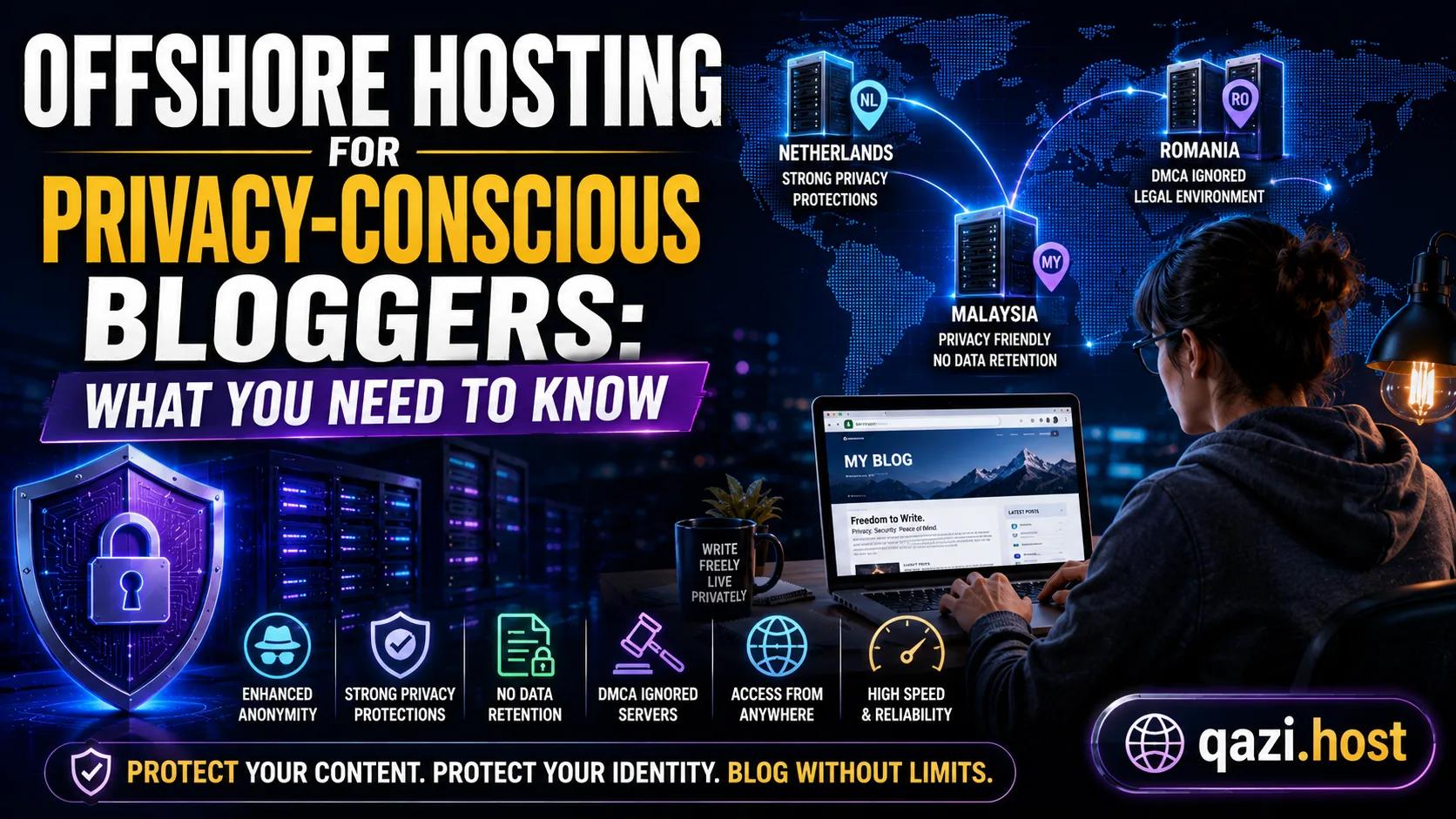
Most bloggers never think about hosting security until the day their site disappears. That day usually comes without warning: a notification from their host that a complaint was received, followed by immediate suspension. If you write about politics, corporate misconduct, health controversies, or any other topic that attracts organised pushback, this scenario is not hypothetical.
Offshore hosting does not make you invincible. But it does make targeted takedowns significantly harder, and it gives you time to respond when complaints come in.
The Specific Threats Bloggers Face
Before we talk about solutions, it helps to understand exactly what you are protecting against:
Abusive DMCA Complaints
Copyright claims are the most common weapon used against bloggers. An image used under fair use, a screenshot of a public document, a brief quote — these are all routinely claimed as infringement by automated bots or by legal teams acting on behalf of companies that dislike your coverage. US-based hosts typically suspend first and investigate later, if at all.
Defamation Claims
A company or individual you have written about may threaten your host with defamation claims to force removal without going to court. Many shared hosting providers would rather suspend a customer than deal with the hassle of a legal threat.
Government Requests
In some countries, government agencies can pressure domestic hosting companies to remove content. If your host is based in the same country as the government applying pressure, compliance is much easier for them than resistance.
DDoS and Harassment Campaigns
Bloggers writing about controversial topics sometimes attract technical attacks — distributed denial of service attacks intended to make the site unavailable. A good offshore host with DDoS mitigation keeps you online through these campaigns.
What Offshore Hosting Actually Protects
Here is what changes when you move to an offshore provider in a jurisdiction like the Netherlands:
DMCA notices lose their force. A Dutch hosting company has no obligation to comply with US takedown notices. They will review complaints on merit, but they cannot be compelled to act by an informal letter from a US lawyer.
US court orders require separate enforcement. Even if a US court orders your content removed, that order must be separately enforced in a Dutch court — a lengthy, expensive process that most parties will not bother with for a blog post.
Your host cannot be easily pressured. A government or corporation trying to pressure a small US host with legal threats will find it much harder to do the same to an EU-based provider operating under different law.
What Offshore Hosting Does NOT Protect
Offshore hosting protects your hosting account. It does not:
- Protect your domain registration — your registrar can still pull your domain if a court orders it
- Protect you personally from legal action in your own country
- Protect you from valid copyright claims — if you actually infringed copyright, offshore hosting buys time but not immunity
- Make you anonymous — unless you also use privacy-protecting practices for account registration and payment
A complete privacy and resilience setup for a blogger typically includes: offshore hosting + privacy-focused domain registration + a content delivery network with DDoS protection + careful operational security on your own devices. Hosting is one piece, not the whole picture.
Privacy Features to Look For in an Offshore Host
Not all offshore providers are equally privacy-conscious. Look for these specifically:
Minimal Registration Requirements
Some offshore hosts allow account registration with just an email address and do not require identity verification for standard shared or reseller plans. This limits what can be disclosed if a data request is made.
Crypto Payment Acceptance
Paying with cryptocurrency reduces the paper trail linking your identity to your hosting account. Bitcoin is the most common; some hosts accept Monero for stronger payment privacy.
No-Log Policy
Ask whether your host logs access requests to your account control panel or keeps records of your activity beyond what is needed for billing and abuse prevention. Fewer logs means less to hand over.
Physical Server Location Verification
Always verify that the servers are physically located where the provider claims. Ask for the data centre name and check the IP address with WHOIS tools. Some "offshore" marketing is misleading — servers may be in the US even if the company is registered overseas.
Practical Setup Tips for Privacy-Focused Bloggers
- Choose your hosting jurisdiction first, based on the likely source of complaints against your content.
- Register your domain through a privacy-respecting registrar in a different jurisdiction from your host — Namecheap (US) with WhoisGuard, or Njalla (Sweden) are popular options.
- Use a CDN (Cloudflare free tier works) to mask your server's actual IP address. This also provides basic DDoS protection.
- Pay with crypto if account registration privacy matters to your situation.
- Keep regular backups stored somewhere separate from your host. Even the best offshore host can have data centre issues.
The Reseller Option for Serious Bloggers
If you run more than one blog, or you manage sites for others, a reseller hosting account at an offshore provider gives you much more than a standard shared account:
- One account to manage multiple isolated blog installations
- Each blog can have its own cPanel — useful if you want to compartmentalise
- Resource pools can be allocated per site
- Better value than buying separate shared plans for each site
Many privacy-conscious bloggers who started with one site find themselves building a small network of properties. A reseller plan at an offshore host is the most efficient way to manage that.
Is This Right for You?
If you answer yes to any of these, offshore hosting is worth considering seriously:
- Your content is critical of powerful organisations, companies, or governments
- You have previously had content taken down via informal complaints
- Your audience includes people in countries with internet censorship
- You publish investigative journalism, whistleblower material, or sensitive research
- You want your hosting account decoupled from your personal identity as much as legally possible
At Qazi.Host, we have worked with bloggers, journalists, and content creators from over 50 countries. We understand what they need — reliable hosting that stays online when complaints come in, with a team that reviews every abuse report rather than auto-complying.
Our reseller hosting plans start at affordable rates and include cPanel, WHM, and enough resources to run multiple sites. If you are just starting out with a single blog, our shared hosting plans are a practical entry point. Contact us with any questions about your specific situation.
Written by
Ahtsham Khan Qazi
Founder & CEO, Qazi.Host · RHCSA · CCNA · 14+ years in server administration
Runs the shared, reseller and dedicated infrastructure behind Qazi.Host and writes these guides from the servers he administers. Corrections and questions are welcome on WhatsApp.
Read full bio →Related Articles
More guides on Offshore Hosting to help you make the right decision.
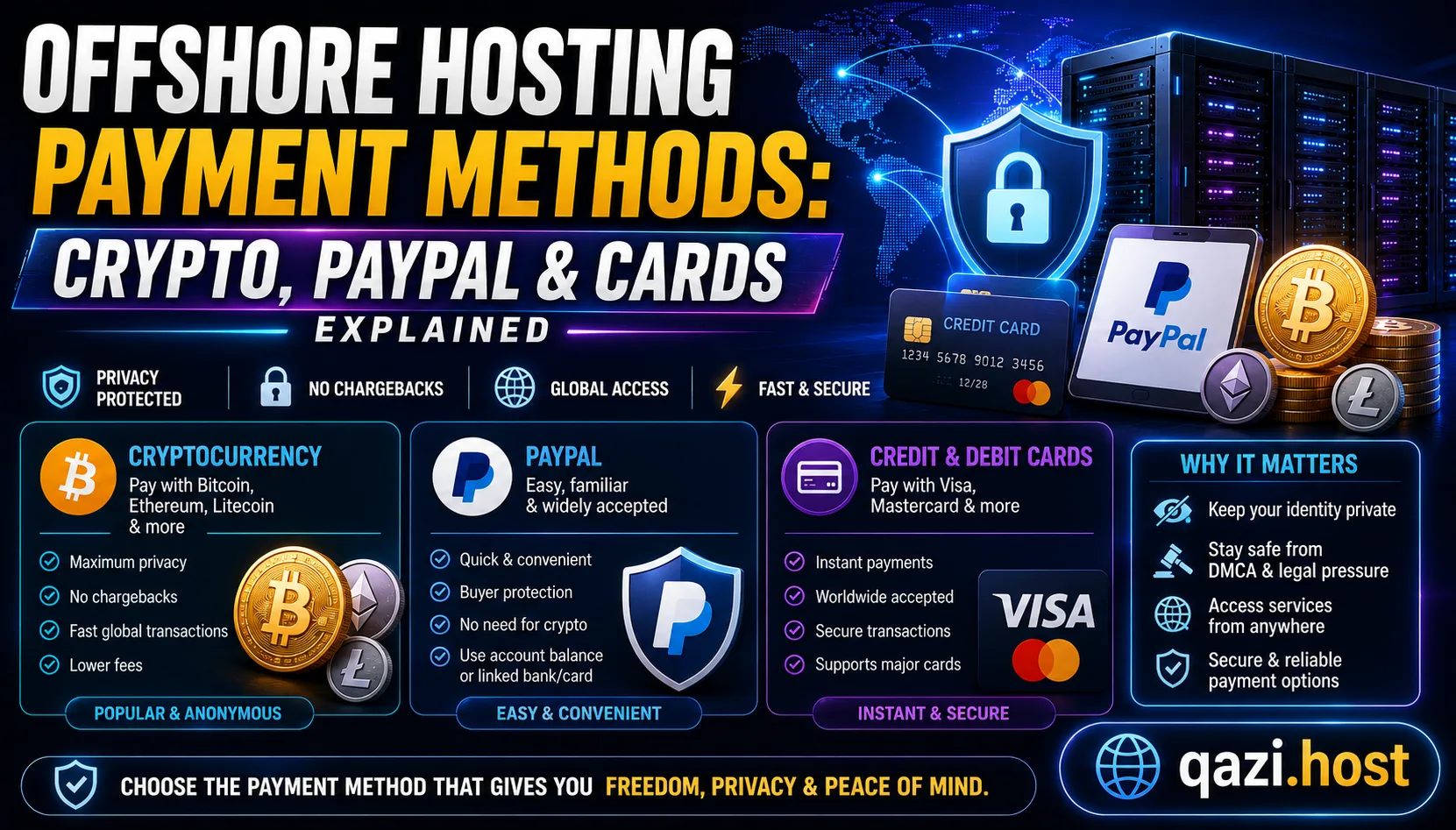
Offshore Hosting Payment Methods: Crypto, PayPal & Cards Explained
Which payment method should you use for offshore hosting? This guide covers the privacy, convenience, and reliability trade-offs between crypto, PayPal, and credit cards when paying for offshore hosting.
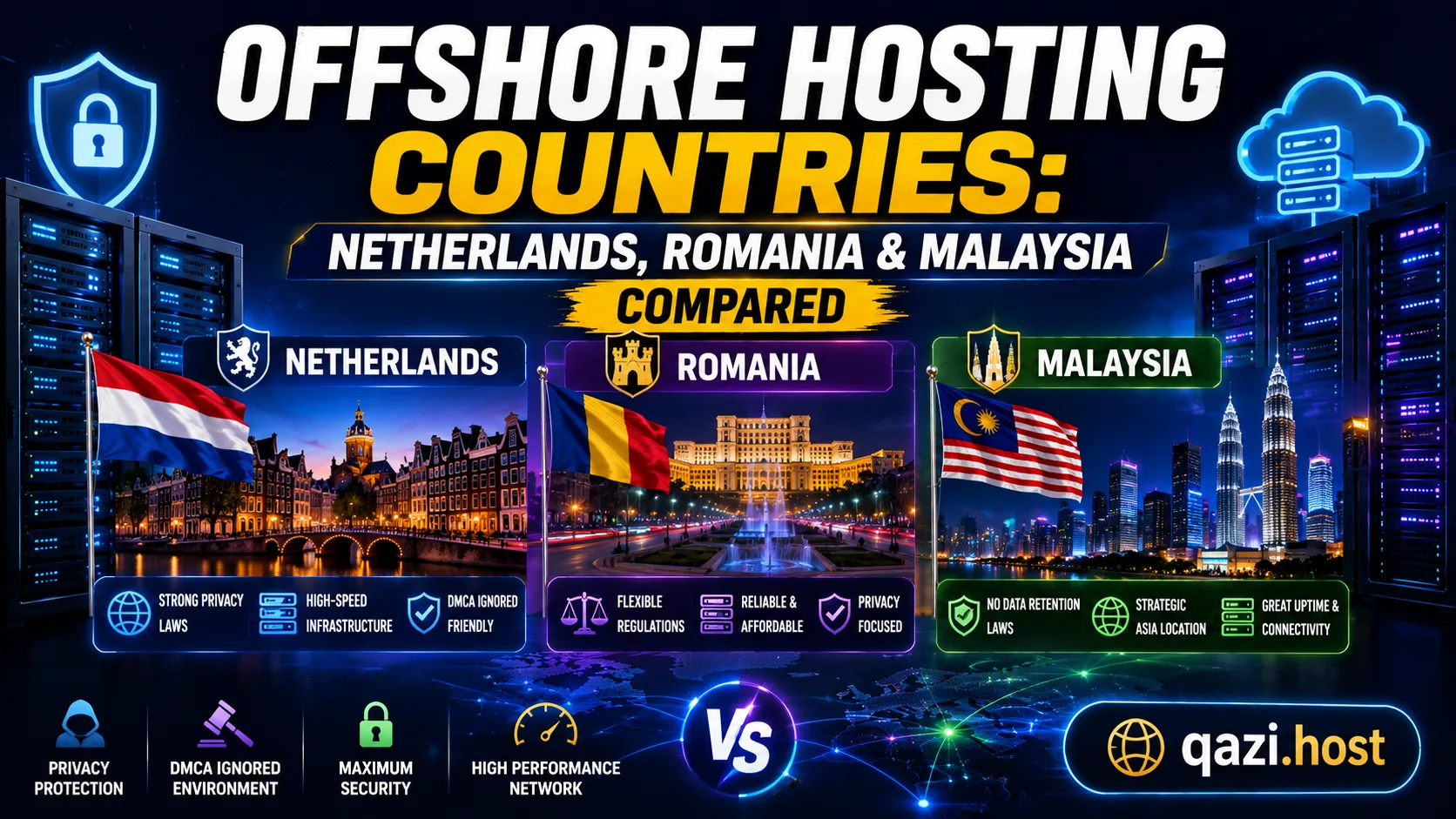
Offshore Hosting Countries: Netherlands, Romania & Malaysia Compared
Not all offshore hosting locations are equal. This guide breaks down the Netherlands, Romania, and Malaysia — their laws, infrastructure, privacy protections, and which use cases each suits best.
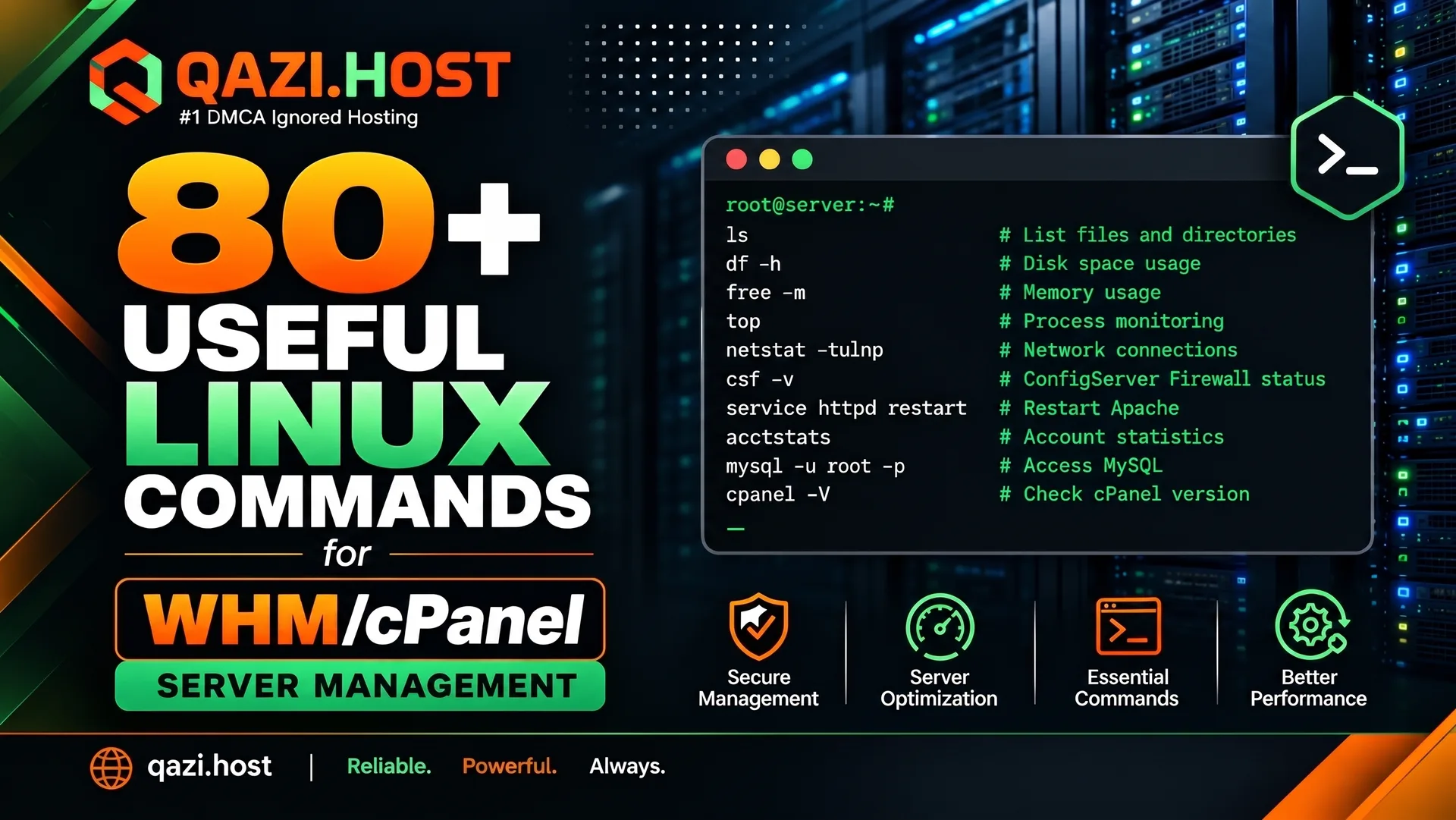
80+ Useful Linux Commands for WHM/cPanel Server Management
87 Linux commands for cPanel servers that admins actually use — SSH basics, cPanel scripts, Exim, MySQL, CSF, logs and disk cleanup, every command ready to copy.
cPanel Server Management and Monitoring: Complete Guide
What cPanel server management includes, what to monitor and alert on, the weekly routine, incident response, and installation vs management vs monitoring.